
From Concept to Control: Tamara Press on Identity, Power, and the Modern Woman
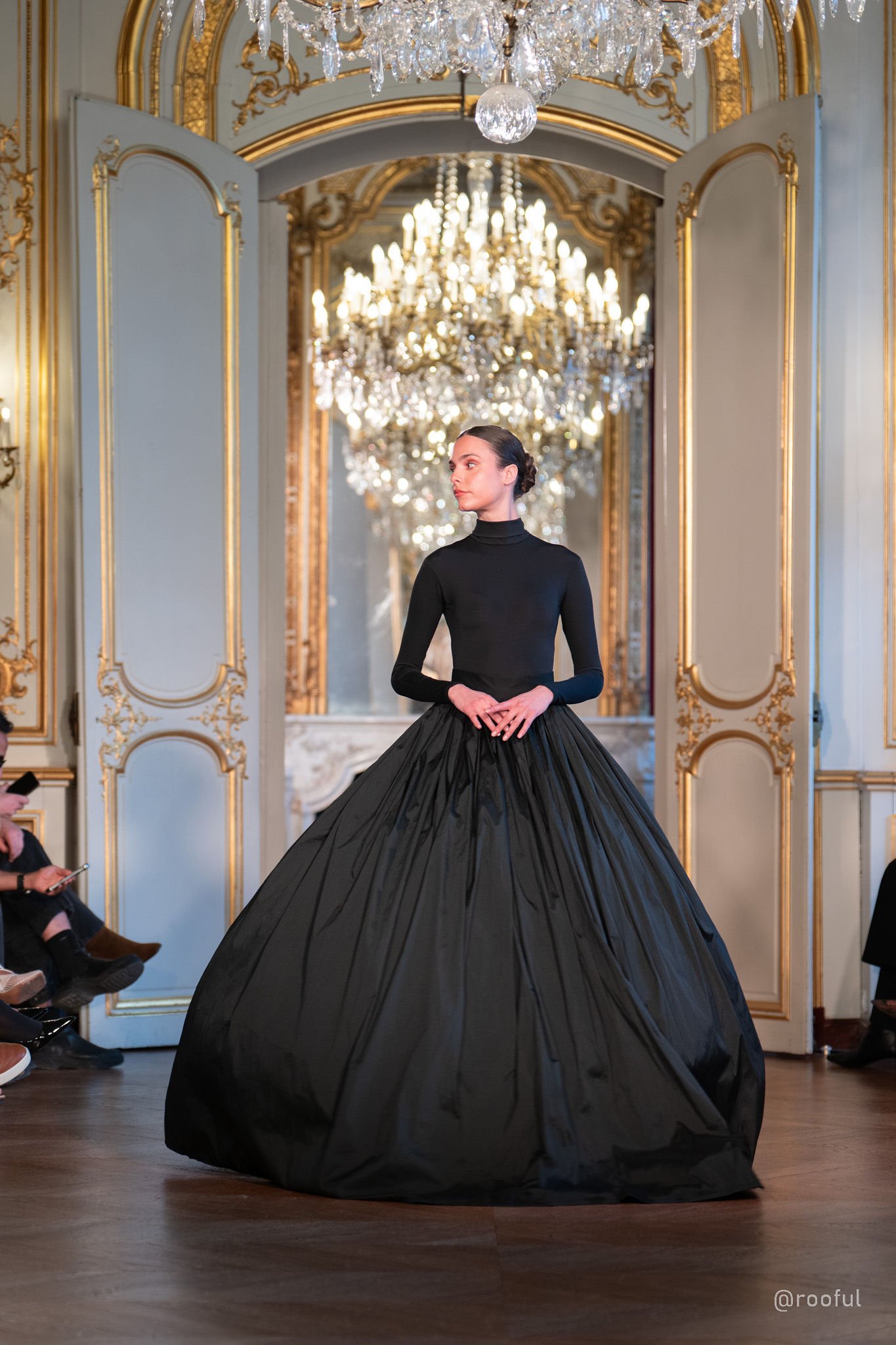
Photo Credit: Rooful Ali
Your work carries a strong visual identity. How would you define the DNA of the Tamara Press woman?
The DNA of the Tamara Press woman is rooted in strength, intention, and presence. She is not just dressing to look good. she is dressing to communicate power, identity, and vision. There is always a balance between structure and emotion in her aesthetic: sharp silhouettes, architectural volumes, and bold compositions softened by moments of light, texture, and femininity. She is strategic and self-aware. Every piece she wears has a purpose whether it’s to enter a room with authority, to express her individuality, or to challenge expectations. She understands fashion not as decoration, but as a tool for positioning and storytelling. Visually, her DNA lives in contrasts: masculine tailoring vs. sensual detailing, minimalism vs. statement, control vs. fluidity. She is global, ambitious, and unapologetically evolving. A woman who doesn’t wait to be seen—she makes herself impossible to ignore.
“The DNA of the Tamara Press woman is rooted in strength, intention, and presence. She is not just dressing to look good. She is dressing to communicate power, identity, and vision.”
There’s a clear sense of intention in your silhouettes and structure. What guides your decisions when shaping a collection?
Every decision starts with a question: what does this collection need to say and why now? I don’t design randomly or purely from aesthetics. I design from concept, strategy, and context. First, I define the message: the emotion, the statement, the narrative I want to put into the world. From there, everything becomes intentional silhouettes, volumes, fabrics, and even how the garments move. Structure plays a key role because it allows me to control perception. A strong shoulder, an exaggerated volume, or a precise cut is never accidental; it’s there to shape how the woman is seen and how she feels in that moment. I’m also constantly balancing creativity with reality. A collection has to be visually powerful, but it also needs to function within the industry editorially, commercially, and emotionally. In the end, my process is about alignment: concept, body, and message working as one.
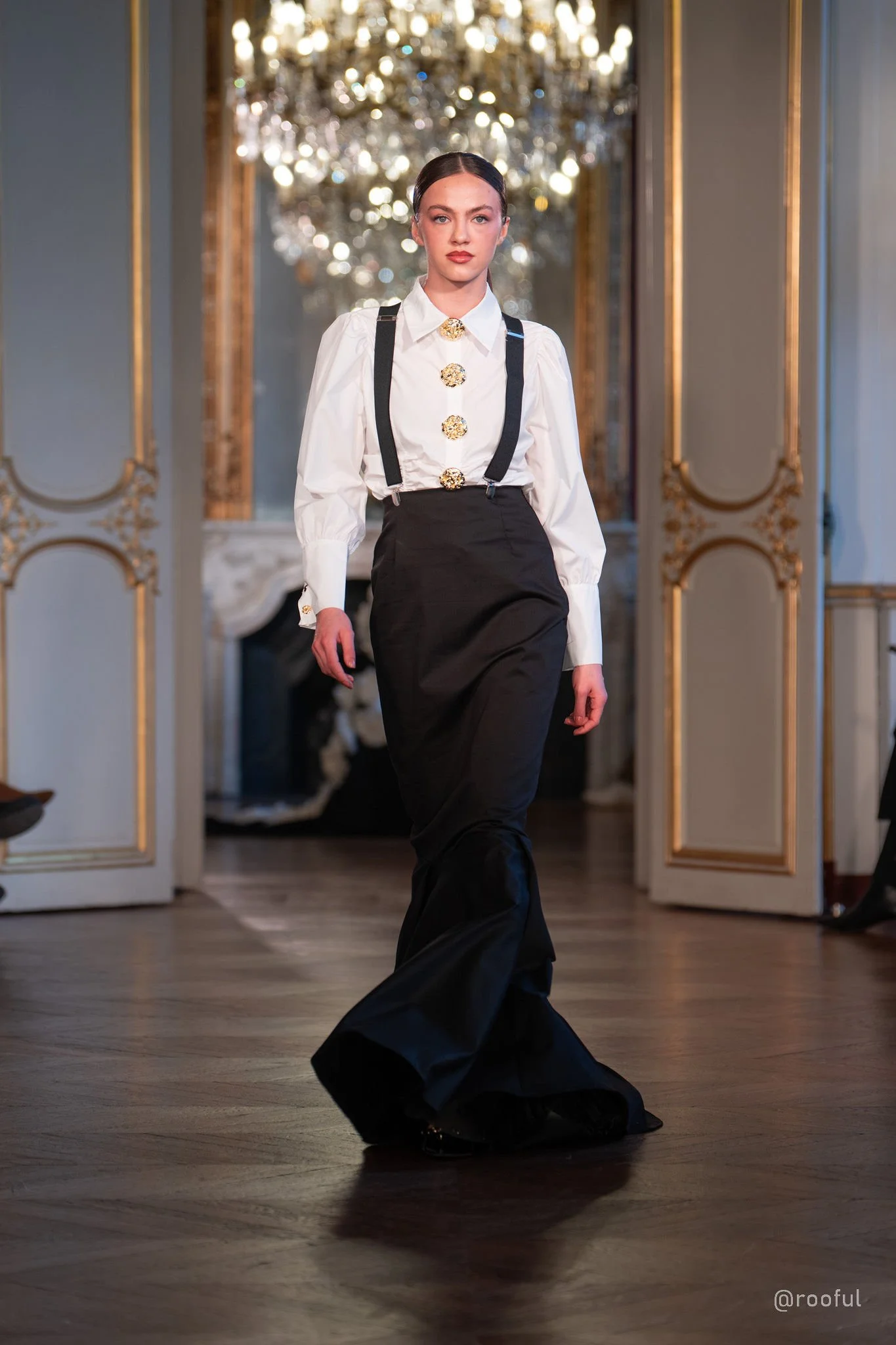
Photo Credit: Rooful Ali
What influences—whether cultural, artistic, or personal—are currently informing your designs?
Right now, my influences are a mix of architecture, cultural contrasts, and personal evolution. I’m deeply inspired by urban structures and city energy—skylines, glass towers, reflections, and the way light hits metallic surfaces. There’s something powerful about how architecture occupies space, and I translate that into garments through volume, structure, and sharp lines. Culturally, I’m drawn to the contrast between classic elegance and contemporary boldness. References from past decades—especially moments of strong, defined silhouettes—merge with a more modern, almost futuristic attitude. It’s that tension between what feels timeless and what feels disruptive. On a personal level, my work is evolving alongside me. I’m in a phase where I’m very focused on expansion, visibility, and positioning, and that naturally reflects in the designs. The pieces are more intentional, more commanding—they’re created for a woman who is stepping into bigger spaces and owning them. Everything I’m creating right now comes from that intersection: space, identity, and the desire to be seen at a higher level.
“Right now, my influences are a mix of architecture, cultural contrasts, and personal evolution. I’m deeply inspired by urban structures and city energy—skylines, glass towers, reflections, and the way light hits metallic surfaces. “
Your pieces often lean into bold construction and presence. What draws you to designing with that level of statement in mind?
I’ve never been interested in clothing that just blends in. What draws me to bold construction is the ability to shift perception instantly. A strong silhouette has power—it changes how a woman is seen, but more importantly, how she feels. When you exaggerate a shoulder, extend a length, or build volume, you’re not just designing a garment; you’re designing presence. You’re giving her a different energy the moment she puts it on. For me, fashion is a language, and subtlety isn’t always the most honest way to communicate. Sometimes the message requires clarity, strength, and impact. That’s where the statement comes in—not as excess, but as precision. There’s also something very intentional about taking up space. Many women have been taught to reduce themselves, to soften their presence. My designs do the opposite—they amplify it. So the boldness isn’t just aesthetic. It’s about visibility, control, and identity.
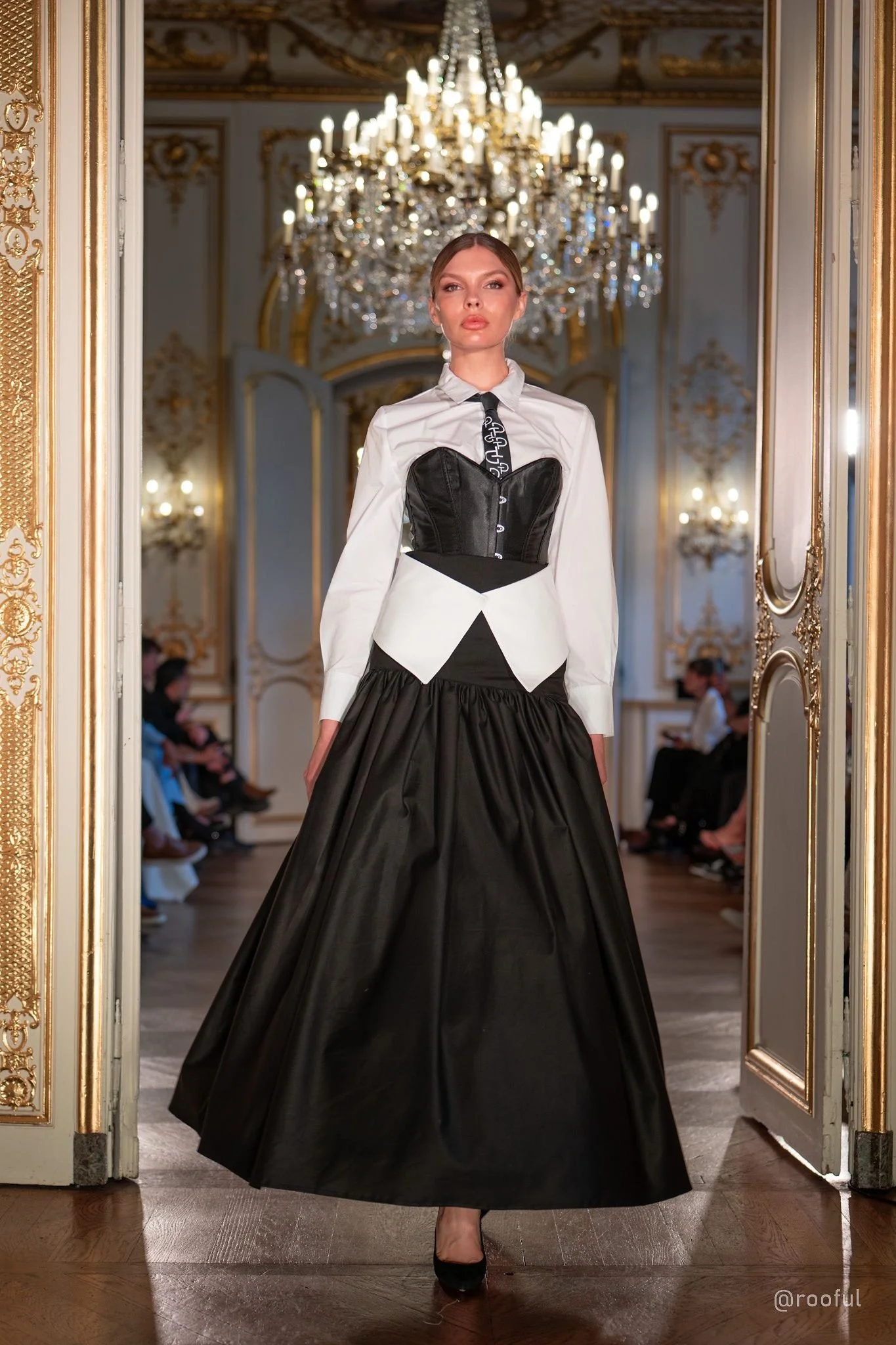
Photo Credit: Rooful Ali
Your brand exists between conceptual runway and wearable fashion—how do you maintain that balance without losing your point of view?
For me, that balance comes from being very clear on one thing: the concept is never negotiable—but the expression can adapt. I always start from a strong creative vision, something that has a clear identity and point of view. That’s what gives the brand its consistency and recognizability. But once that’s defined, I translate it into different levels—some pieces are more editorial, more runway-driven, and others are designed to live in real life. It’s not about diluting the idea; it’s about scaling it intelligently.
I think a lot about how a concept can move: from a statement look on the runway to a piece that someone can actually wear and integrate into their wardrobe, without losing that essence. The codes remain the same—structure, contrast, intention—but the intensity shifts. Also, my background in both design and business makes me very aware that fashion needs to exist in multiple dimensions: image, desire, and reality. So I don’t see it as a compromise. I see it as translation—keeping the DNA intact while allowing it to exist at different levels of the industry.
“I think a lot about how a concept can move: from a statement look on the runway to a piece that someone can actually wear and integrate into their wardrobe, without losing that essence. The codes remain the same—structure, contrast, intention—but the intensity shifts.”
Fresh off the runway at Modest Fashion Week, what did this moment represent for you—and how do you feel your collection was received?
Fresh off the runway at Modest Fashion Week, this moment represented validation, expansion, and evolution. Validation, because presenting my work in an international context like Paris reinforces that the vision behind the brand has a place on a global stage. Expansion, because it’s not just about showing a collection, it’s about entering new conversations, new markets, and new audiences. And evolution, because each runway pushes me to refine the message, the construction, and the identity even further. This collection, especially with Bling Extended, was about translating my DNA into a more layered and conscious narrative, respecting the essence of modest fashion while still maintaining strength, structure, and presence. That balance was key. In terms of reception, what I value most is the reaction beyond aesthetics. The feedback I received was about how the pieces felt powerful, different, and intentional. There was a clear recognition of identity, which for me is everything. It confirmed that you don’t need to dilute your vision to enter new spaces. You just need to know how to adapt it without losing its core.
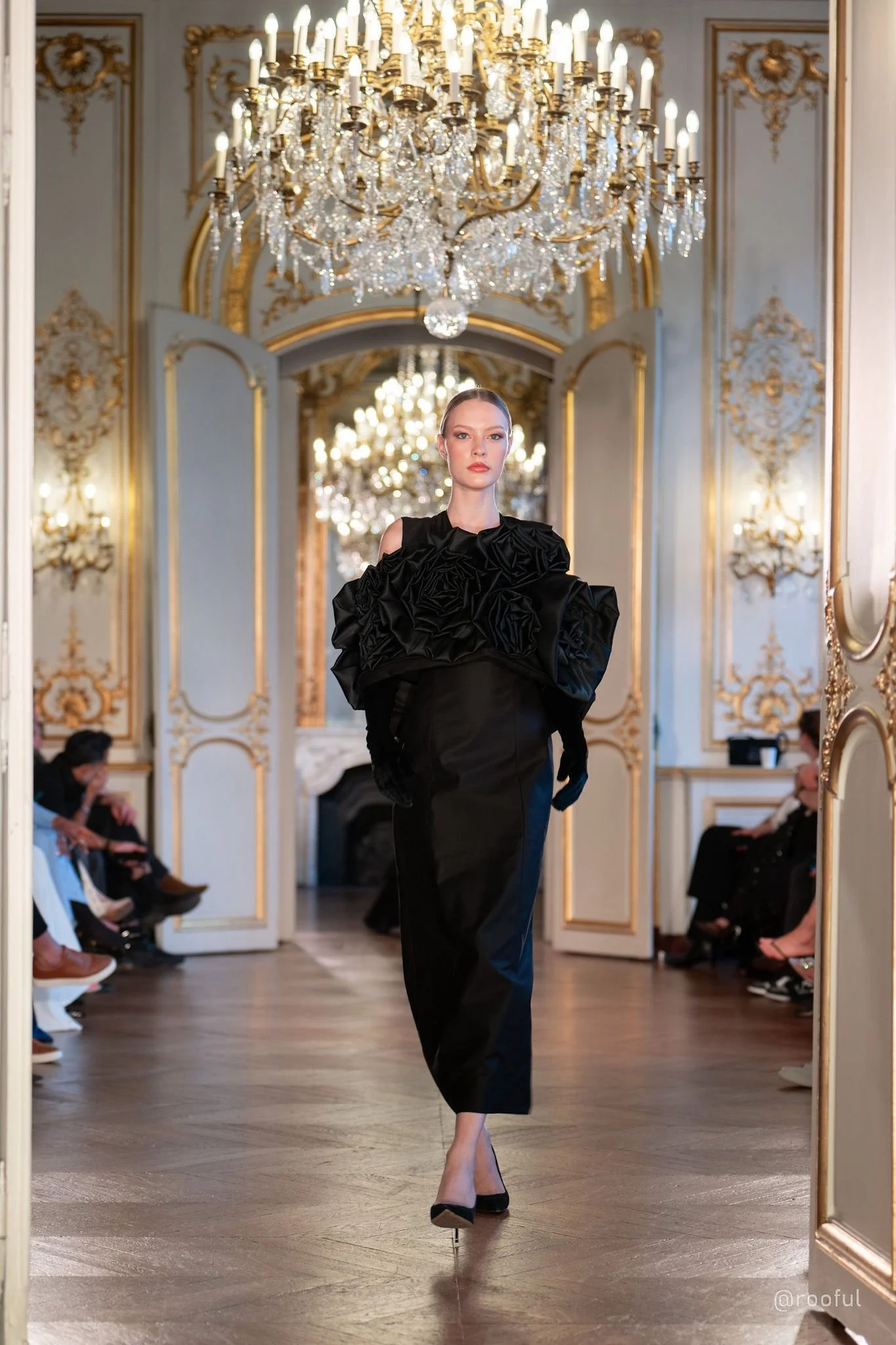
Photo Credit: Rooful Ali
Showing your work across international runways, how does your background and perspective shape what you bring to each space?
My background gives me a very dual perspective: I’m not only a designer, I’m also someone who understands strategy, positioning, and how the industry really works. That changes everything I bring into a runway space. Coming from Spain but working internationally, I naturally operate between different cultures and expectations. That makes me very aware of context—how to enter each space with respect, but also with a clear identity that doesn’t disappear to fit in. I don’t approach a runway as just a creative moment. I see it as a platform—a place to communicate something precise about the brand. Every look, every silhouette, every decision is part of a bigger narrative about who we are and where we’re going. There’s also a strong sense of intention behind it. I’m very conscious of the value of these opportunities, so I don’t show up just to “be there.” I position the brand, open doors, and expand its global presence. So what I bring to each space is not just a collection— it’s a point of view, a strategy, and a very clear sense of identity.
“Coming from Spain but working internationally, I naturally operate between different cultures and expectations. That makes me very aware of context—how to enter each space with respect, but also with a clear identity that doesn’t disappear to fit in.”
Modest fashion is having a powerful global moment—how do you see your designs contributing to that evolving narrative?
I see modest fashion not as a limitation, but as a creative framework, one that is redefining how we understand power, elegance, and visibility. My contribution comes from bringing my core language structure, strength, and presence into that space without diluting it. With Bling Extended, for example, I approached modest fashion through construction: longer lines, controlled volumes, layering… but always with intention. The silhouette remains powerful, the message remains clear. What interests me is shifting the perception of modest fashion from something purely conservative to something strategic and expressive. You can cover more and still say more. You can be modest and still be visually commanding. I also think there’s something very current about it. In a world where everything is immediate and often overexposed, modesty introduces a different kind of allure, more controlled, more intelligent, more intentional. So my role within that narrative is to show that modest fashion can hold the same level of impact, identity, and sophistication as any other segment of the industry, just through a different lens.
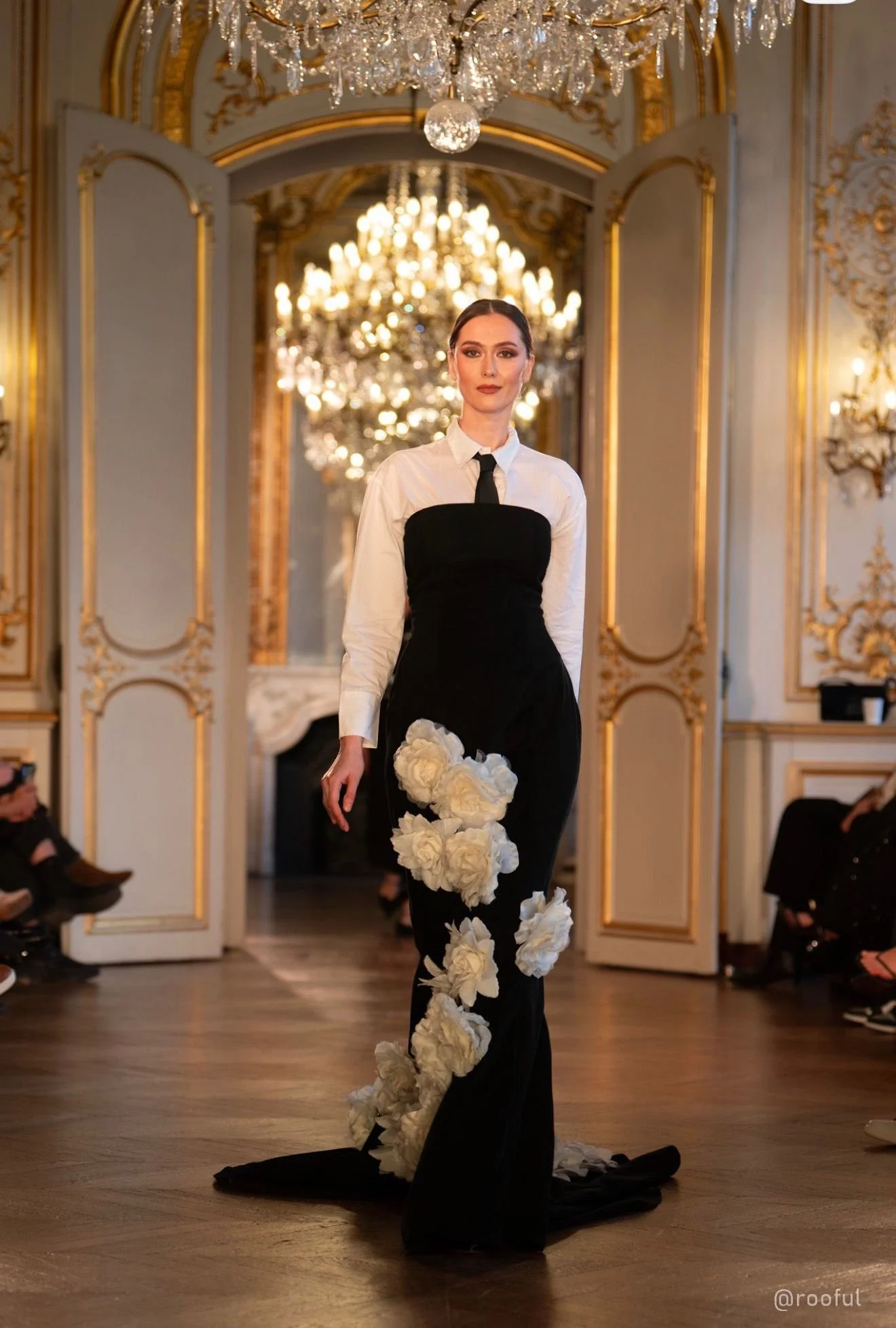
Photo Credit: Rooful Ali
“I want them to feel that every piece comes from a place of clarity. That nothing is random. The structure, the silhouettes, the presence, it’s all designed to say something powerful without needing explanation. “
When someone encounters your work for the first time, what do you want them to immediately understand about your brand?
What I want them to understand immediately is that this is not just fashion, this is identity,intention, and positioning made visible. I want them to feel that every piece comes from a place of clarity. That nothing is random. The structure, the silhouettes, the presence, it’s all designed to say something powerful without needing explanation. At first glance, they should recognize strength. At second glance, they should discover a strategy. Because my brand is not only about how a woman looks, but about how she enters a space, how she is perceived, and how she owns that moment. If someone understands that what I create is meant to elevate, to position, and to make a woman unforgettable, then they’ve understood the essence of Tamara Press.